Friday, December 2, 2011

Movies and popcorn, anyone?


I FOUND it astounding that some people said they have never set foot inside the only place which offers hours of solace and relaxation for people regardless of ethnicity and age—the Hollywood Theater in San Jose.
I thought that was just a running joke, until one day when I dragged a buddy to watch one movie which I had been waiting for a long time and right in the middle when I was totally lost in the movie, he poked me in the side and confessed that it was his first time be inside Hollywood for his 10 years of being here.
Another friend who has been here for over 25 years said she also has never set foot inside the theater but would rather rent DVDs and watch movies from home.
I had been on Saipan but two months when I took the chance to see what this island had to offer in terms of theater entertainment. The name Hollywood would astound any newcomer of course but although there’s no comparison from the theaters back in the Philippines, the seven-screen multiplex located next to Price Costco or Joeten Superstore has eased a lot of ‘bad hair days’ for me and a lot of residents here.
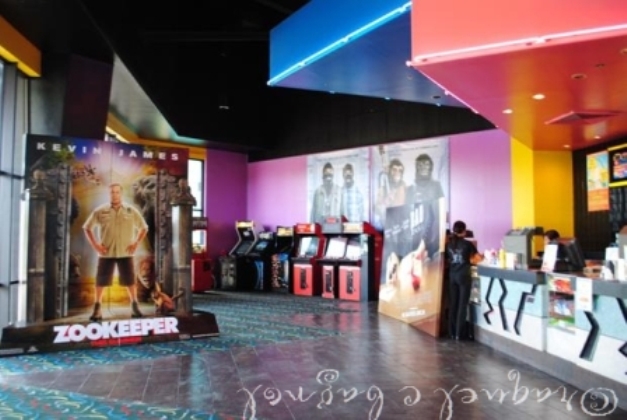
The Hollywood Theater screens the latest first-run movies and I always had to curb the urge to watch on the first day because several times I’ve tried sitting at the topmost row where you can barely stretch your feet, and at the very front where you will get stiff neck afterward and come out of the theater dazed because of a very close encounter with the actors on the screen.
Watching movies perched in your sofa or from your bed is a good option because you can do it wearing house clothes or just a bathrobe, where you have the power to pause the movie if you want to have a restroom break or a few minutes nap but going to the theater is a totally different experience.
Opening the glass doors after you bought your ticket and inhaling the smell of popcorn is bliss, but carrying a huge bucket to munch on throughout the movie is priceless.
The Hollywood Theater is Saipan’s meeting place of kids and parents, friends and relatives especially during the weekends. It is one place here where I never hesitate to watch movies alone and still feel at ease, something I could never imagine doing back in the Philippines. This usually happens when my companions and I don’t agree with what movies to watch so we go our separate ways and meet up after.
When you feel the need to relax, steal an hour or two and make the Hollywood Theater your destination. Try the fun of hopping from one movie to the next when you have the luxury of time.

Friday, November 25, 2011

Tales from the lonely benches


HAVE you ever tried parking along the Beach Road and actually sit in one of those benches that are scattered far and few along the long stretch of beaches near the walkway?
You may say that these lonely-looking benches with wooden planks and metal feet, facing the sea exposed to the rain, sun and the winds day in and day out have been there forever. So, what’s with those ordinary benches by the seaside anyway?
I can say nothing much, except you’ll find some planks missing and some rusty nails sticking out but if you take a few minutes to sit down and be in for something you’ve always taken for granted.
Oh the stories those benches can tell!
Arriving an hour early for a massage appointment at the Beach Road one evening, I crossed the street and relished the chance to finally sit on one of the three benches facing the sea, stretch my legs, breathe in the salty tang of the ocean air and just let time pass and watch the world go by. It was a chance which I had been dying to do since forever.
I was in a daydreaming state when an angry-looking guy flopped down on the bench farthest from me. Not aware that somebody was there, he broke the silence and started yelling at somebody or whoever he was talking to in his cellphone. I was glued to my seat, not wanting to eavesdrop yet not wanting to get up and catch his attention. After a few minutes, the guy stood up and left, not knowing I was there.
Trying to recapture my earlier bliss, I closed my eyes and took a deep breath when two joggers passed by, pleasantly swapping stories to each other. Minutes later, a couple passed by, bickering about bills and family matters as though they were at home and not on a public walkway.
Talk about peace! The thought of relaxing flew away totally this time, and I began to see the benches in different way—as an avenue to learn about people and their lives. It’s like being given a chance to peek into a window and see things for what they are without the main characters knowing that you’re there. Okay, call it eavesdropping but no one can blame you for sitting there and hearing all those things. In the first place, you were there to sit and relax!
From that time, I never drive along the Beach Road without glancing at these benches which are deserted most of the time but if I do see anyone sitting there, I begin to weave stories in my mind as to what they are thinking and what they are going through.
Many times I see couples or families watching the sunset from the benches and had to curb the urge to stop and snap photos—after the blasting of horns and screeching sounds of the cars behind me of course.
Those benches could indeed provide several chapters to write a book. As for those bench occupants, be careful because one day, you might just find your stories in the pages of a book!

Friday, November 18, 2011

Peace on a marble tablet

A FEW steps behind the Flag Circle at the Court of Honor of American Memorial Park in Garapan is a wide marble tablet which I have always seen before but have not given it any particular notice, until last week when I had time on my hands and I was at the area.
After covering the solemn ceremony of the Veteran’s Day at the Court of Honor, I ventured near the wharf area to cool off and noticed with news eyes this monument that I had no idea played a very big role marking the end of the bloodiest battle in the Pacific.
Stepping on the tiled cement, I approached the tablets and read for the first time what was written there.
The middle tablet bears the following inscription:

PEACE AT LAST. At 6:35 August 15. 1945, the Commander in chief of the US Pacific Fleet and Pacific Ocean Areas Admiral Chester W. Nimitz ordered all offensive action against the Japanese to cease. All the guns of war fell silent. The long post war process of healing, reconstruction and the building of a basis for mutual trust and lasting peace began. The signing of the peace treaty between Japan, the United States and the Allied Powers on September 8, 1951 at the San Francisco Peace Conference formally brought World War 11 to a close.

Flanking the middle tablet were two tablets signed by US President Harry S. Truman and Japan Prime Minister Shigeru Yoshida attesting to their desire for peace and reconciliation.
Joggers and bikers around the area usually pass by without paying attention to this marble tablet, or maybe they already know it is there and thinks no big deal of it.
Here is something that the present and the future generations must continue to be aware of. The tablet is just a piece of marble, yet it is an instrument announcing to the world that although the scars of the war will always be there peace was finally attained. It signifies an end to tragedy, to a war that claimed thousands of both US and Japanese soldiers and civilians, and left thousands more of families homeless.
If you’ve got some free time, try to visit American Memorial Park’s Peace Memorial. It is one place that a lot of people from different parts of the world would give a lot for just to visit this monument of peace. It is right within your reach.

Friday, November 4, 2011

WW11 reminders at the airport


THE minute you emerge from the arrival area and out into the open at the Rota International Airport., a collection of Japanese WW11 airplane engines and anti aircraft guns neatly arranged in a row will meet your eye.
I saw the collection right away at the left side of the airport but had to curb the itch to walk over for a closer look and start snapping photos of these artifacts that continue to attract tourists and history buffs from all over the world. It was my first time to set foot on Rota and I had no spare time because a friend was picking me up in a few minutes. I vowed to come back, which I did the following day when I finally rented a car to do some exploring on my own.
The rustic airplane engines were placed in constructed stone pedestals surrounded by neatly trimmed grass. Albeit rusty, the engines were obviously maintained and oiled because they don’t show the impression that they are ready to fall off into pieces at a moment’s notice.
At the end of the row of airplane engines is an equally rusty yet well-maintained anti aircraft gun still intact after all these years.
I took my own sweet time inspecting the relics and capturing them on the lens to share to the rest of the world who haven’t had a chance to visit the island.
The variety of World War 11 relics scattered all over the island is just one of the many bonuses you get in driving around the idyllic Paradise of this 13km long island in addition to the rich historical sites, the long stretches of white sandy beaches, rich evergreen forests, and the slow, leisurely lifestyle.
History records show that Rota was occupied by Japanese forces during World War II and became an important link for the Japanese to get their supplies from Japan.
In an island where stop-lights are unheard of and where motorists wave at each other on the road, where a remote-island atmosphere rules in comparison to the hustle and bustle of Guam or Saipan 30 minutes hopper ride away, these World War 11 relics feel more at home.
Rota is a jewel waiting for visitors to come and explore its treasures, and these treasures can be seen right from the airport and all over the island.

Friday, October 28, 2011

Peace Memorial on a cliff top


Photos by Raquel C. BagnolSITUATED over 800 feet above sea level is a must-see and must-visit mountaintop on Saipan that has played a very important part in the island’s history.
Standing near the railing at the view deck of Suicide Cliff on a Friday noon was not in my plan but there I was last week, cameras slung around my neck ready to take another batch of photos of the place where thousands of Japanese soldiers and civilians choose to jump to their deaths than to surrender to the American troops during the war.
Turning away from the breathtaking views of the Veterans Cemetery and the blue ocean that stretched for miles and miles away, I walked a few paces to the Peace Memorial, a monument that has claimed visits from thousands of tourists, each year. Most of the visitors are Japanese who come to offer flowers and food to their dead ancestors.
According to the sign at the foot of the monument, the Peace Memorial was constructed to console the spirits of those who died — regardless of their nationality — at this historic area and to remind the people of the tragic futility of war. The memorial is built with hopes that everlasting peace and friendship will prevail among mankind
The construction of the Peace Memorial came through the efforts of the people who lived in the Pacific islands and it was dedicated in 1972 during the Trust Territory government.
During the early months of the year, the Peace Memorial takes on a spectacular view as the flame trees blossom where its flaming red and orange flowers provide a wonderful contrast to the blue skies and lush foliage.
Sadly, burglary incidents have been reported happening in this Peace Memorial site and at Suicide Cliff.
With no security in the area and with overgrown bushes at the side of the Peace Memorial leading to the Banadero Trail,  a thief can get away easily after robbing a tourist.
Stakeholders in the tourism industry said the government should look into clearing these bushes and jungle area so criminals will have nowhere to hide. Visitors feel safe and peaceful. After all, this is a Peace Memorial.
http://mvariety.com/special-features/around-the-island/41239-peace-memorial-on-a-cliff-top.html

Friday, October 21, 2011

Exploring historical pieces at Tinian airport

 STRANDED for over an hour to wait for the next flight in an airport has never been a bother for me, but not when you are not feeling well and the ground seems to shake and your start to see double of everything. Most of all, not if you are stranded at the Tinian Airport where there is nothing to do but stare at the empty seats and the small confines of the departure area.
Fighting the urge to curl up on one of the benches and go to sleep last Monday, I had time on my hands with nothing to do. I left my Kindle at home, which would have come handy that time and it was no use wishing I had called earlier to reconfirm my flight back to Saipan. Otherwise I would have spent another hour in bed in my hotel room.
Walking out of the departure lounge, I stared dully at the deserted roads and the burning heat outside and saw something that I have always seen before but never paid any attention to—relics of the World War 11 located just in front of the airport building.
Fishing out my cameras and my boredom forgotten, I walked over and started taking photos of the Japanese cannon and B29 wheels and an antiaircraft machine gun. These historical pieces were found in a firing position and hidden in one of the caves in San Jose, Tinian and have been moved to the airport to create a historical display.
Innocently sitting there in all its rusted glory is a machine gun with the steel seat still attached was reported to be one of those that inflicted heavy damage on the battleship Colorado and destroyer Norman Scott during the first day of the battle of Tinian.
Beside the machine gun is a plaque erected and dedicated to honor the surviving VPB-116 Blue Raiders airmen who served on Tinian.
Located at the historic west field of the island, Tinian Airport is the third of three runways used by the 58th Bomb Wing of the 20th Air Force and constructed for the B-29 Super-fortress for smaller planes.
That spare hour before my flight gave me a chance to capture on the lens more relics that have played important roles during the World War 2. If you’re on Tinian, take a few minutes to check out these artifacts right outside the airport building. You just don’t know how many thousands of people around the world envy you for having this chance.

Friday, October 14, 2011

Moon shooting at dawn


THE whole neighborhood was already in dreamland past 3 a.m. when I went out of the house to get a whiff of fresh air a couple of days ago. The world was bathed in full moonlight that it was almost daylight. I was unable to resist the urge to go out and try to capture the full round beauty that most of us take for granted. I decided it was time to put one of my dormant investments to work.
Going back in, I unearthed a 1300mm zoom lens that I purchased some months from its box, shaking off the layers of dust that had accumulated from neglect.
Struggling with a heavy duty 6-foot tripod and the heavy lens was a battle. I haven’t found time to experiment with the knobs and bolts and nuts of both tripod and lens yet and it took me a good quarter of an hour before I was finally able to attach the lens to the tripod.
Getting out of the door with the whole thing was a harder battle and I was scared that the moon would have set by the time I finally get out and the sun would be on its way up.
I succeeded after much struggling and positioned the lens toward where the moon was. I saw only total darkness. I twisted and adjusted knobs and the camera settings but still nothing. The lens would not work. There goes hundreds of dollars down the drain, I gave up in frustration.
I was about to pack everything up and start the struggle of getting the whole thing back inside when I found that the lens cover was still in place that’s why everything was black.
Like a child, I peeked into the viewfinder and kept turning the focus until finally I saw my moon, big and full and round with the blotches and craters that I was unable to capture with my standard lens.  Excited, and armed with my Canon SLR, lens and no knowledge of how to take moon photos, I clicked away, experimenting with different camera settings but it was no easy feat. I had to really stretch out my arm to reach the far end of the lens where the focus was.
Tired but satisfied at last, I ended my dawn adventure and downloaded the photos to my computer. I was unable to capture sharp photos but I was happy with a couple of photos I considered ‘passable’ from almost a hundred shots. Talk about the effort and the muscle pains I went through the next couple of days from struggling with the heavy weights.
For centuries, the moon has never failed to captivate people from all over the world. It has always been a fascinating and intriguing subject to shoot.
Yes, you are right. There’s a full moon every month and we see it going through the different phases throughout the month. We enjoy its brilliance and take it for granted but have you ever really taken time to appreciate this beauty of nature?
When you can, try to capture the brilliant moon with your camera. You don’t need to be a pro. Just enjoy what you are doing. Saipan is one of those places that has lots of ideal places to get really good shots of the moon. Happy moon shooting!